A Review On Vitamin Classification: How Health Experts Classify And Organize Nutrients
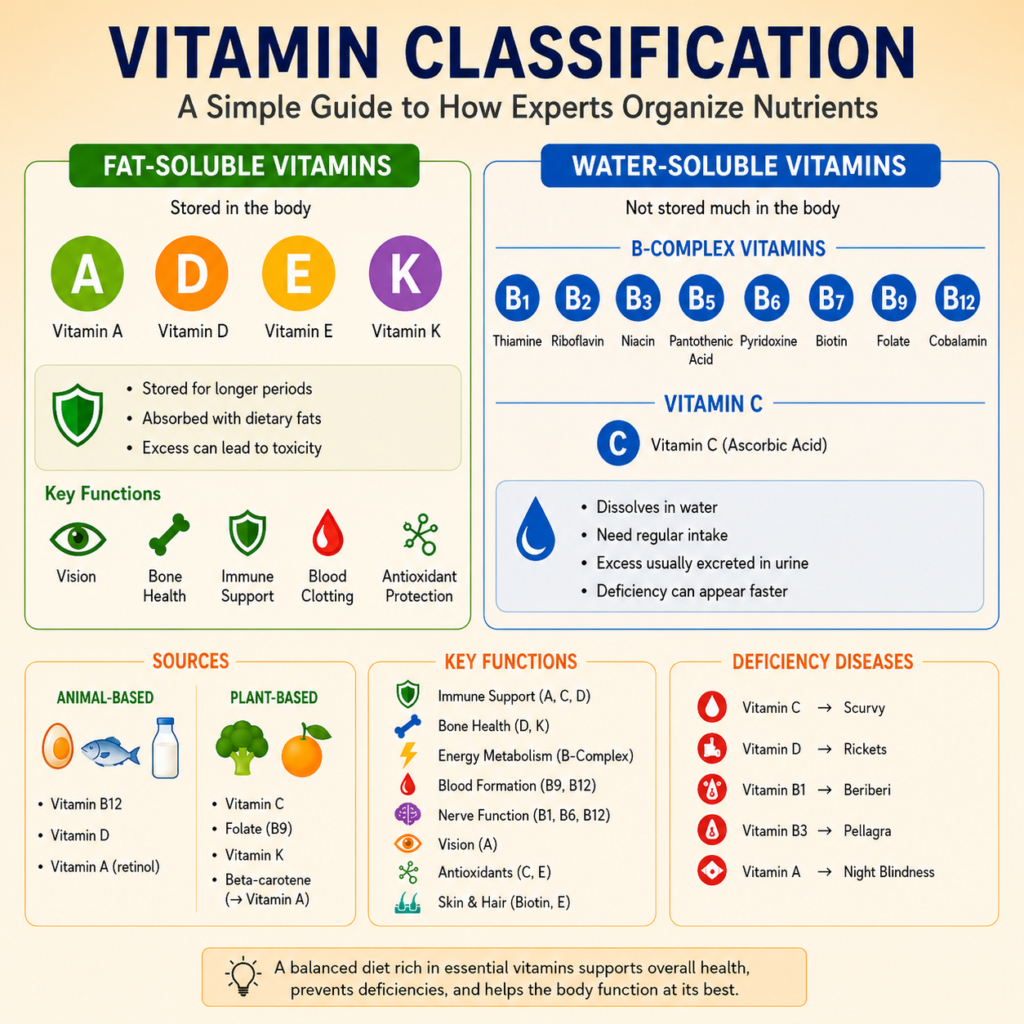
How health experts classify and organize nutrients? Vitamins play an essential role in maintaining human health.
They help support energy production, immunity, bone strength, nerve function, and many other vital processes in the body.
However, vitamins are not simply grouped randomly. Health professionals use structured systems to classify them in practical and scientific ways.
Understanding how helath experts classify and organize nutrients can help people make better dietary decisions, understand supplement labels more clearly, and recognize the importance of balanced nutrition.
Doctors, nutritionists, pharmacists, and dietitians rely on vitamin classification systems to identify deficiencies, recommend treatments, and guide proper nutrient intake.
In this guide, we will explore the major ways vitamins are classified in healthcare and nutrition science. Understanding how health experts classify and organize nutrients is crucial for anyone looking to improve their health.
Why Vitamin Classification Matters
The body requires vitamins in small amounts, but each vitamin performs highly specific tasks. Some vitamins help produce energy, while others support immune defense or blood clotting.
By organizing vitamins into categories, health professionals can:
- Understand how vitamins behave inside the body
- Detect and treat nutrient deficiencies
- Recommend proper supplementation
- Prevent toxicity from excessive intake
- Design balanced nutrition plans
- Support medical treatments and recovery
The system used by healthcare professionals makes nutrition science easier to understand and apply in real-world health situations.
Thus, how health experts classify and organize nutrients plays a significant role in health education.
1. Classification by Solubility
One of the most important methods used to classify vitamins is based on solubility. This determines how vitamins are absorbed, stored, and removed from the body.
Fat-Soluble Vitamins
Fat-soluble vitamins dissolve in fat and are stored in body tissues and the liver. Because they remain in the body longer, excessive intake may sometimes lead to toxicity.
The fat-soluble vitamins are:
- Vitamin A
- Vitamin D
- Vitamin E
- Vitamin K
A common medical memory trick for these vitamins is “ADEK.”
Functions of Fat-Soluble Vitamins
These vitamins support several critical body systems:
- Vitamin A supports vision, skin health, and immune function
- Vitamin D helps maintain strong bones and calcium absorption
- Vitamin E acts as an antioxidant to protect cells
- Vitamin K helps with blood clotting and bone metabolism
Food Sources
Fat-soluble vitamins are commonly found in:
- Fish oils
- Eggs
- Dairy products
- Nuts and seeds
- Leafy green vegetables
- Liver
Because these vitamins absorb better with dietary fats, healthcare professionals often recommend taking them with meals.
It’s essential to consider how health experts classify and organize nutrients when planning meals.
Water-Soluble Vitamins
Water-soluble vitamins dissolve in water and are not stored extensively in the body. Excess amounts are usually excreted through urine, which means regular intake is important.
The water-soluble vitamins include:
B-Complex Vitamins
- Vitamin B1 (Thiamine)
- Vitamin B2 (Riboflavin)
- Vitamin B3 (Niacin)
- Vitamin B5 (Pantothenic Acid)
- Vitamin B6 (Pyridoxine)
- Vitamin B7 (Biotin)
- Vitamin B9 (Folate)
- Vitamin B12 (Cobalamin)
Vitamin C
Vitamin C is also water-soluble and plays an important role in immune health and collagen production.
Functions of Water-Soluble Vitamins
These nutrients mainly help with:
- Energy metabolism
- Red blood cell production
- Brain and nerve function
- Immune support
- Skin and tissue repair
Because the body does not store large amounts of most water-soluble vitamins, deficiencies may develop faster when intake is poor.
Regularly assessing how health experts classify and organize nutrients can lead to better health outcomes.
2. Classification by Biological Function
Another important way how health experts classify and organize nutrients is according to the systems and functions they support.
Vitamins for Immune Support
Several vitamins help strengthen the immune system, including:
- Vitamin C
- Vitamin D
- Vitamin A
These nutrients support immune cell activity and help the body respond to infections.
Vitamins for Bone Health
Bone-supporting vitamins include:
- Vitamin D
- Vitamin K
Vitamin D improves calcium absorption, while Vitamin K contributes to proper bone mineralization.
Vitamins for Nerve Function
The nervous system relies heavily on B-complex vitamins, particularly:
- Vitamin B1
- Vitamin B6
- Vitamin B12
These vitamins help maintain healthy nerve communication and brain function.
Vitamins for Skin and Antioxidant Protection
Antioxidant vitamins help protect cells from oxidative stress.
Key antioxidant vitamins include:
- Vitamin C
- Vitamin E
Biotin and Vitamin E are also commonly associated with skin and hair health.
Many people benefit from understanding how health experts classify and organize nutrients in their daily lives.
Learning how health experts classify and organize nutrients provides clarity on dietary needs.
3. Classification by Deficiency Diseases
Medical professionals often connect vitamins with the diseases caused by deficiencies. This method helps students and clinicians recognize symptoms quickly.
Common Vitamin Deficiency Diseases
Vitamin C Deficiency – Scurvy
Scurvy can cause:
- Weakness
- Gum bleeding
- Poor wound healing
- Fatigue
Vitamin D Deficiency – Rickets
Rickets affects bone development in children and may lead to soft or weakened bones.
Vitamin B1 Deficiency – Beriberi
Beriberi affects the nervous and cardiovascular systems and is associated with severe thiamine deficiency.
Vitamin B3 Deficiency – Pellagra
Pellagra is linked to niacin deficiency and may cause:
- Skin inflammation
- Digestive problems
- Mental confusion
Vitamin A Deficiency – Night Blindness
Low Vitamin A intake can impair vision, especially in low-light conditions.
Understanding deficiency diseases allows healthcare professionals to identify nutrient-related problems more effectively.
4. Classification by Food Source
Another way experts organize nutrients is by identifying whether vitamins mainly come from plant or animal sources.
Animal-Based Vitamin Sources
Common vitamins from animal products include:
- Vitamin B12
- Vitamin D3
- Retinol (active Vitamin A)
Foods such as meat, eggs, fish, and dairy products are major sources.
Plant-Based Vitamin Sources
Plant foods commonly provide:
- Vitamin C
- Folate
- Vitamin K1
- Beta-carotene
Beta-carotene is converted into Vitamin A by the body.
Fruits, vegetables, legumes, and leafy greens are important plant-based nutrient sources.
It’s informative to know how health experts classify and organize nutrients from various food sources.
5. Classification by Clinical Use
In hospitals and healthcare settings, vitamins are also grouped according to their therapeutic or clinical uses.
Vitamins Used During Pregnancy
Pregnant women are often advised to take:
- Folate
- Iron with Vitamin C
Folate is especially important for fetal neural development.
Vitamins for Bone Disorders
Doctors commonly recommend:
- Vitamin D
- Calcium
This combination supports bone strength and helps reduce fracture risk.
Vitamins for Neuropathy and Nerve Health
Patients with nerve-related conditions may receive:
- Vitamin B1
- Vitamin B6
- Vitamin B12
These vitamins support nerve repair and function.
Vitamins for Recovery and Immunity
Vitamin C, zinc, and Vitamin D are commonly used to support recovery and immune function.
When recovering from illness, understanding how health experts classify and organize nutrients is vital.
The Importance of Balanced Vitamin Intake
Although supplements can be useful, healthcare professionals generally encourage obtaining nutrients from whole foods whenever possible.
A balanced diet containing fruits, vegetables, proteins, healthy fats, and whole grains usually provides a wide range of essential vitamins.
Supplements may be recommended for:
- Nutrient deficiencies
- Pregnancy
- Restricted diets
- Elderly individuals
- Certain medical conditions
However, excessive supplementation can sometimes cause complications, especially with fat-soluble vitamins that accumulate in the body.
For this reason, professional guidance is important before taking high-dose vitamin supplements.
In summary, how health experts classify and organize nutrients underlines the importance of proper nutrition.
Final Thoughts
Understanding how experts organize nutrients provides valuable insight into nutrition science and healthcare. Health professionals classify vitamins based on solubility, biological function, deficiency diseases, food sources, and clinical use.
These classification systems help doctors, nutritionists, and pharmacists understand how vitamins work in the body, recognize deficiency symptoms, and guide safe supplementation.
Whether you are learning about nutrition for personal wellness or professional education, understanding vitamin classification creates a stronger foundation for making informed health decisions.
A well-balanced diet, combined with proper nutritional knowledge, remains one of the most effective ways to support long-term health and overall wellness.
Ultimately, how health experts classify and organize nutrients can influence your overall health journey.
Disclaimer: This content is for informational purposes only and does not constitute medical advice. Consult a healthcare professional before taking any vitamin and supplements.
Note:
This article contains affiliate links. If you purchase through these links, we may earn a small commission at no extra cost to you. This helps support our website and allows us to continue providing helpful content.